Book publisher Hachette has pulled out of its deal with author Mia Ballard over accusations that her novel, Shy Girl, was written with the assistance of a large language model.

I say “accusations” because the actual evidence here is pretty thin. The arguments presented are all either “the writing looks like AI” or “we ran bits of the novel through an AI detector and it told us the text was AI-generated.”

First off, human beings are quite bad at telling the difference between machine-generated and human-generated art. The logical inconsistencies in Shy Girl's plot and prose could be the result of a chatbot overrunning its context window, or just sloppy writing, or (considering the subject matter) a deliberate attempt at surrealism. Most of the “obvious tells” of LLM-generated text (em dashes, rule of three, etc.) are actually features of a formal African English education, because LLMs were largely trained by criminally underpaid African workers. And guess who most often gets accused of “sounding like a chatbot”?

Then we get into AI detection tools, which The New York Times claims to have used. Many “AI detectors” also use machine learning to some degree — analyzing and comparing two sets of text is something LLMs are built to do — but these tools tend to produce a lot of false results. The differences between human-generated text and machine-generated text are going to be largely invisible to an LLM designed to mechanically produce text that could plausibly pass as something a human wrote.

And that’s not even getting into the “AI detectors” that simply paste the submitted text into ChatGPT and ask it, “hey, did you write this?” To quote a friend of mine with approximate knowledge of many things, “anyone who tells you they have a tool to accurately detect AI is probably a liar, and liars love to use AI, so it’s probably just feeding the text into ChatGPT and asking.”

Three years ago, I noted that because “it looks like it was made by AI” is an accusation that can’t be proven right or wrong, it would inevitably be used as an ideological bludgeon against any art an accuser personally didn’t like very much. And now it looks as though a lot of people really didn’t like Shy Girl, didn’t think anyone else should like Shy Girl, and found the perfect way to bully it off the market.

(Does it feel good to be right all the time? No, it’s awful.)

Trying to suss out whether a book was written using an LLM or not is, in my opinion, pointless. A book should be criticized on the basis of whether it sucks — and, so far, provably LLM-written books have universally sucked. When an LLM manages to write a novel that’s actually good, we can revisit this topic.

And I’m fine with making it a rule that nobody can publish a novel they didn’t personally write, but in that case someone should have a word with Tom Clancy’s corpse.

Read more... )

-K

It’s fascinating to me how the cultural object of The Book, defined as a physical stack of paper with words in it, generates so much more excitement than an ebook. Both take arguably the same amount of effort, and yet one “counts” as an achievement in a way that the other doesn’t.

Anyway: The Book.

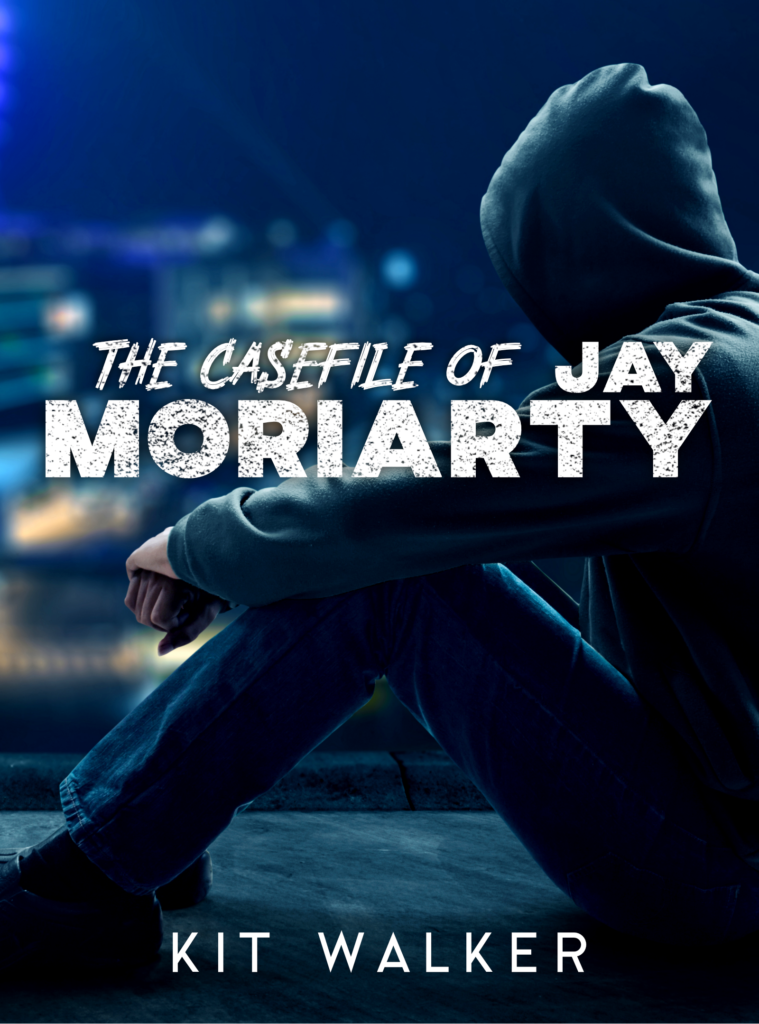
New Release: The Casefile of Jay Moriarty, Collected Edition

A modern day re-imagining of Sherlock Holmes’ most famous enemies!

Following his polite ejection from the SAS at the end of a decade-long military career, Captain Sebastian Moran is at loose ends. Between cheating at cards and freelance jobs as a security consultant, he’s just barely managing to keep busy — but when a routine penetration test goes awry, Moran is thrown into the path of a brilliant, short-tempered hacker named Jay Moriarty.

Up until now, Moriarty has worked alone. But Moran is clever, unpredictable, and unlike anyone Moriarty has ever met, and the attraction between them quickly escalates into an intense, confusing relationship.

Together, Moriarty and Moran must face an aerospace executive covering up a deadly secret, a real estate developer who will do anything to climb the social ladder, a famous author funding a hate movement, a holiday resort full of international gangsters, and the treasonous leader of a rogue mercenary company.

Collects the first five installments of Kit Walker’s Casefile of Jay Moriarty series, revised and edited, plus three bonus stories!
Get the Paperback | Get the eBook

Paperbacks are currently only available from Amazon, but will be arriving on DriveThruFiction soon! If you want your copy fast, get the Amazon edition. If you’re willing to wait for higher print quality, stay tuned for a link to the DTF edition.

Read more... )

-K

Draft2Digital has just rolled out distribution through Bookshop.org, which means a bunch of my books are now available on Bookshop. However, it looks like Bookshop is blocking distribution for titles that are under a certain length. My short stories haven’t made it onto the site; neither have any of the Saintstown books, nor the first Casefile of Jay Moriarty book.

Some other writers are also reporting that their erotica books were blocked from distribution through Bookshop. According to Draft2Digital, this isn’t a blanket ban; they claim “additional safeguards” are needed before erotica can be sold on Bookshop, and that “support is coming soon.” I can only assume these “safeguards” will include age verification, which presents its own issues.

It would certainly be a wild choice for Bookshop to suddenly ban sex books, considering how hard they’re riding the Heated Rivalry hype wave. I’ve seen other platforms try to thread the needle between romance and erotica by claiming erotica is “for the purpose of titillation/arousing sexual desire,” and meanwhile romance … isn’t, I guess? I think BookTok would disagree with that assessment.

And also, as I’ve pointed out before, who gets final say over the “purpose” of a piece of art? Who gets to decide whether I’m a pornographer? And why is a pornographer such a terrible thing to be?

I suspect this tension between a publishing industry going all-in on “spicy” romance and a retail industry desperate to crack down on any and all “adult” content will come to a head sooner rather than later.

Read more... )

-K

Heated Rivalry has pushed gay romance as a genre into the mainstream eye, which of course means we must now be subjected to an endless stream of video essays and thinkpieces about whether certain demographics (women, straight men, people who aren’t into hockey) are “allowed” to like it.

I do understand why this happens. Capitalist society in general (and USAmerican culture in particular) likes to frame consumption as a political act. This, among other things, fosters a desire for one’s consumption habits to convey the “correct” politics; if voting with your wallet is the only real vote you have, then buying the wrong thing — or even buying the right thing for the wrong reasons (voyeurism, ignorance, horniness, etc.) — makes you a bad person. Add to that the perennial audience desire for fictional characters’ experiences and values to perfectly reflect one’s own experiences and values, and you create a perfect storm of derangement in which reading about someone who isn’t like you is somehow stealing from people who aren’t like you.

This is stupid. Thought crime isn’t real. The point of fiction is to explore a point of view outside your own. If you needed me to tell you that, I’m glad I told you that. And speaking as someone who writes this stuff, I don’t particularly care who engages with my art or why — I just care that they’re doing it.

Yes, even if they’re jerking off to it. That’s their business, not mine.

Read more... )

-K

This month marks the 10-year anniversary of the I Will Fight You podcast. In celebration, my co-hosts and I decided to revisit the first movie we ever covered: The Swan Princess.

I keep track of all the movies I own and watch via a website called Trakt, and when I looked up The Swan Princess, I noticed something unusual about the banner image attached to its Trakt listing:

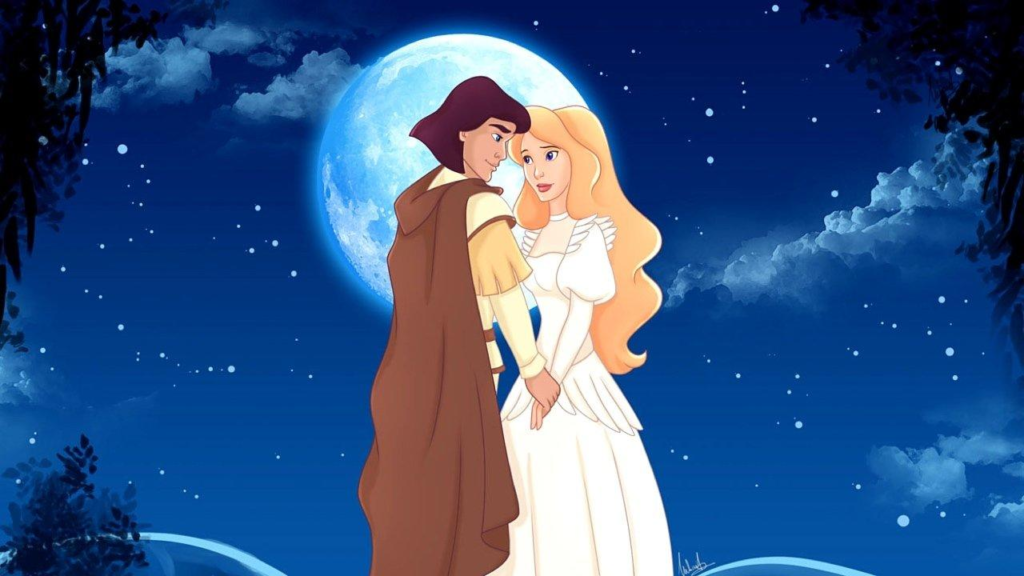
I’ve seen a lot of official promo images for The Swan Princess over the years, and this didn’t look like any of them. That, plus the signature down in the corner, made me suspect this wasn’t an official image at all.

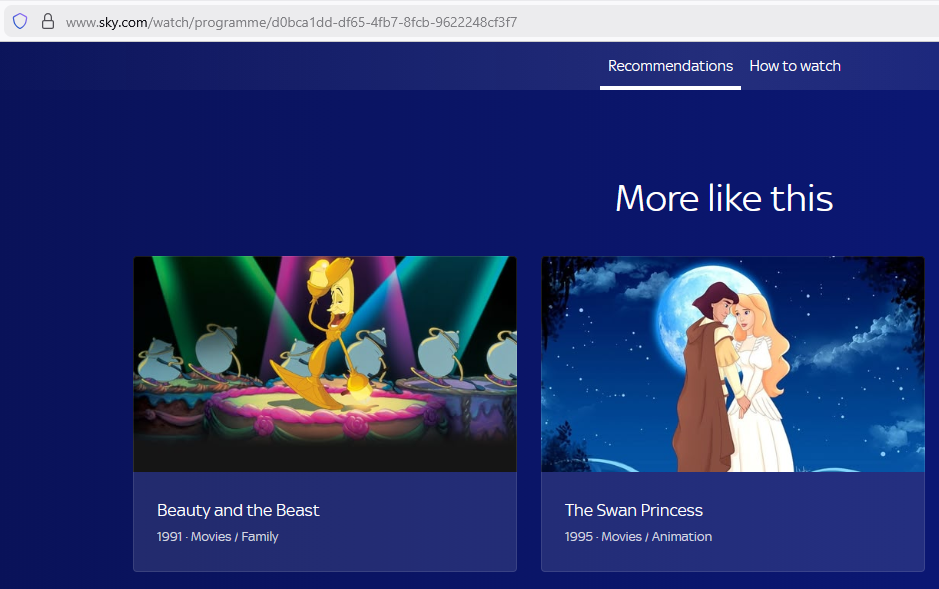
It’s sure being treated like an official image, though. It shows up in the photos section of the movie’s Rotten Tomatoes listing, its Common Sense Media listing, its TMDB listing, this listicle on Looper, and appears to be somewhere in the movie’s image library on Sky TV:

I posted this picture in the Crooked Russian Cam Discord, and eventually one of our members managed to track down the source (thanks, Zagil!). It’s a piece of fanart, drawn by an artist who goes by madam-marla on DeviantArt.

It seems that, sometime in the early 2010s, a blogger went looking for art to accompany a post about The Swan Princess and found madam-marla’s piece through Google image search. Then another blog picked up the image, and another, until inadvertent SEO pushed it near the top of the image search listings for the movie. From there, tired interns and/or automated image scrapers picked it up as an official promotional image, and now it’s everywhere.

I think madam-marla might be owed some money.

Read more... )

-K

Last week, one of my books got a recommendation on Bluesky from KJ Charles. For those of you unfamiliar with the name: KJ Charles is a prominent author in queer romance fiction. Within a certain niche, this is like Stephen King popping up to tell everyone I’m cool.

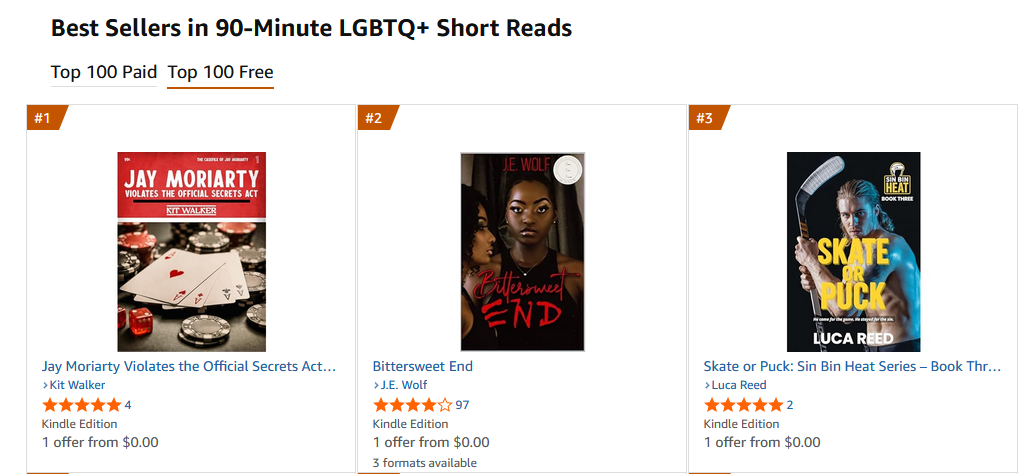
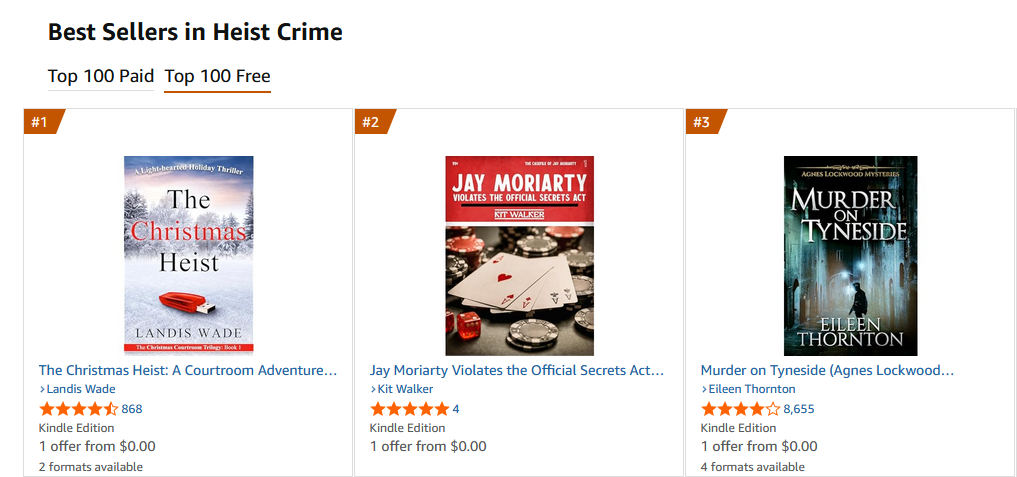
As you might guess, sales of my books experienced a significant bump. Because I’m in such a narrow cross-section of genres, that was enough to briefly kick me to the top of two different Amazon charts:

As always, the key to being top of your field is to pick a very small field.

… I guess I’d better get back to work on that print collection.

Read more... )

-K

Enough of my work is now listed on Goodreads that I decided to claim my author page--mostly to keep anyone else from claiming it, and also to try and clear out a few works from an entirely different Kit Walker. At no point in the 90s was I recording meditation tapes, as I was busy attending elementary school instead.

I don't intend to use Goodreads to track my personal reading, since I use the Storygraph for that. But I've hooked up my blog feed and opened the Ask the Author section, on the off chance the Goodreads userbase wants to ask me things. This should also speed up the process of any new work appearing on the site.

So if you're at all interested in following me on Goodreads, you can find me here. I'm told those meditation tapes will be removed shortly. We'll see.

(a.k.a. how to sell ebooks on places that aren’t Kindle)

Let’s face it, Amazon has a history of screwing people over. Especially those people who depend on Amazon to make a living. If you sell ebooks on Kindle and you want to insulate yourself from whatever raw deal those maniacs come up with next, you should make sure your ebook is also being sold elsewhere. And by “elsewhere” I mean “everywhere.”

Please note: following this guide will make you ineligible for KDP Select. If you’re mostly dependent on revenue from KDP Select, this guide will not be helpful to you. But Amazon will ruin your life someday.

Step 1: Make an EPUB

KDP, and certain other services like it, allow you to upload a Word document and automatically convert it to an eBook. If you really want to sell your ebook everywhere, though, you’ll need an EPUB file.

EPUB is a near-universal ebook file standard. Most ebook apps and eReaders can read EPUBs, and every vendor will accept an EPUB file for upload. You can even use an EPUB instead of a Word document on KDP.

You can create an EPUB file for your ebook using Sigil, which is a free and open-source ebook editor with extensive documentation. EPUB files are formatted in XHTML, so a quick education on HTML basics from W3C would serve you well here.

Don’t forget to include a cover and table of contents within your EPUB, as well as metadata tags for your book’s title and your name. Most vendors require them.

Optional: Convert to MOBI and PDF

Newer Kindles can apparently read EPUBs. Older Kindles might not. In the event someone with a Kindle wants to buy your book from a vendor that isn’t Amazon, you can package your EPUB with a MOBI file.

You can convert your EPUB to MOBI using Calibre. Calibre can also help you convert your ebook to a PDF, although I wouldn’t recommend using a Calibre-generated PDF for any print-on-demand services.

Step 2: Upload Everywhere

Here’s a list of vendors I upload my ebooks to:

None of these sites have exclusivity agreements, meaning you can upload your ebook to all of them at once. Remember to check whether a vendor has submission guidelines for ebooks, and make sure yours fits those guidelines.

Once your ebook is uploaded to these other vendors, you can use Books2Read’s Universal Link feature to centralize most of your book’s URLs into one link.

And now, the next time Amazon nukes an entire department or shadowbans an entire genre, you can send your readers elsewhere to buy your books.

Clarkesworld Magazine, for those unaware, is a publisher of short science fiction and fantasy that is usually open to unsolicited submissions year-round. As of yesterday, they've had to close submissions indefinitely due to a deluge of (allegedly) AI-generated spam.

This looks to be an automated riff on the ol' spam audiobook grift, as explained by Dan Olson here. By using AI, today's grifter can eliminate the (already low) cost of hiring a gig economy ghostwriter. And rather than spam Amazon and Audible, this new version of the grift instead treats short fiction markets as reverse vending machines: insert text, receive cash.

Of course, anyone with half a brain could tell you this is not how fiction magazines work.

But the services used to generate these spam stories aren't free, and I have no doubt somebody's charging a few bucks a head for a webinar on using AI-generated stories to make quick cash. As always, the actual money made is not in the grift itself, but in selling the grift to idiots.

There's a certain type of post you'll see a lot on Tumblr, or the fandom part of Twitter. These posts are always a variation on the same theme: "I want stories where X happens."

X, in this case, might mean:

  • an unconventional setting or time period is explored.
  • a boring trope is subverted.
  • a marginalized character gets to do something cool.

The weird part is, whatever the post is asking for usually exists already. In a lot of cases, it's existed for years (or even decades). But if you reply to any of these posts, naively excited to introduce someone to a broad new horizon of cool shit, you'll quickly learn that the person who posted it:

  • does not read books.
  • or comics.
  • doesn't watch movies made before 2010.
  • or any show that isn't easily bingeable online.
  • they don't care for anything made outside of the U.S., either.
  • all they do, with their precious time on this Earth, is watch whatever the algorithm picked out for them.
  • and complain online about it.

This person lives entirely in a hell of their own making. And if you suggest they might have a better time if they changed their media habits even slightly, they will call you a snob.

And then continue to complain that nobody is telling the kind of stories they want.

tags:

Links

syndicate

RSS Atom

style credit